
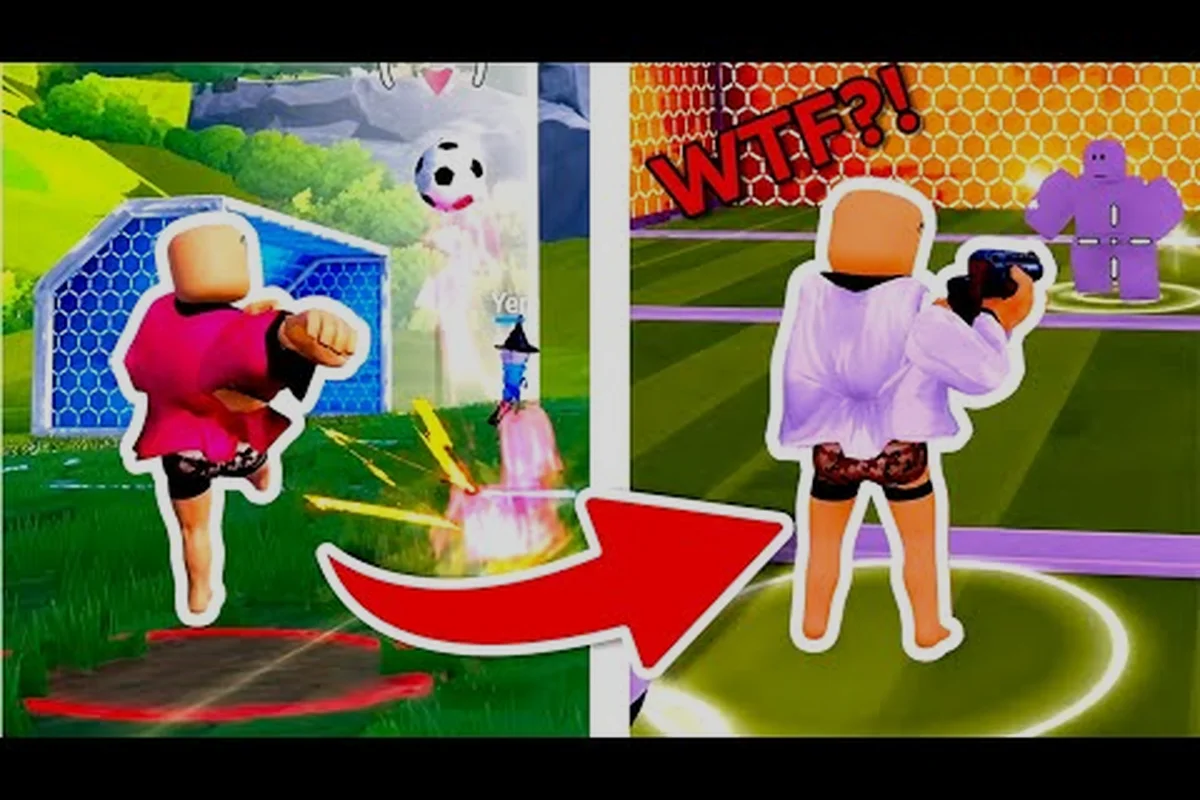
Illegal Soccer game rules strip football down to its barest bones and then hand every player a shotgun, a jetpack, and a personal grudge. The pitch is real, the goals are real, and the ball still has to cross the line — but the referee, the offside flag, and the foul book have all been quietly thrown in the bin. According to the official Roblox page for Illegal Soccer, the experience launched in May 2026 and has already cleared 11.6 million visits with an 85% rating, which tells you exactly how many players are hungry for football without the adults in the room. This guide walks you through every rule that actually exists, every rule that the name quietly deletes, and every mechanic that decides whether you walk off the pitch celebrating or respawning with a fresh kit.
The Pitch, the Teams, and Why There Is No Whistle
Illegal Soccer runs on small 8-player servers, and that number is the first rule worth internalizing. Four players spawn on Red, four on Blue, and the server hands each side a single AI goalkeeper that does not understand the concept of "friendly fire." If you want the deeper breakdown of how player counts shape each match, our guide to Illegal Soccer match length and team sizes covers the full intermission flow, but the short version is simple: 4v4 plus two bots, with two gadget slots per player that can be re-equipped during the pre-kickoff lobby.
The biggest mental shift new players have to make is accepting that there is no foul system. There is no yellow card, no red card, no advantage rule, and no VAR. The match starts at kickoff and only ends when one team has scored more goals than the clock will allow. Everything that happens in between is governed by one principle: if you can do it, you can probably do it to the other team.
What "Illegal" Actually Means in the Rulebook
The name is not flavor text. The game rules of Illegal Soccer are deliberately written to permit behavior that any real-world ref would eject you for. Sportskeeda's beginner framing puts it bluntly — players can "tackle and sabotage opponents freely, including their own teammates" — which produces a match where disruption is just as valuable as scoring. The full list of legal actions includes:
-
Tackling without the ball — a perfectly permitted move, both against ball-carriers and against players simply standing in dangerous positions
-
Shooting the opposing team — yes, with the actual shotgun gadget, not a metaphor
-
Placing landmines, barricades, and jetpack ramming anywhere on the pitch
-
Knocking your own teammates out of the way to clear a shooting lane
If a referee would call it, Illegal Soccer lets you do it. That single sentence is the entire rulebook.
The Pre-Match Lobby and Kickoff
Before the ball is even in play, you choose Red or Blue by stepping on the corresponding lobby pad, then spend the intermission swapping your two-item loadout. Once both sides are full, the match begins with a standard kickoff from the center circle and the timer starts counting. There is no coin toss, no captains' handshake, and no "good game" ritual — just the ball, eight players, and the countdown.
How Matches Work From Kickoff to Final Whistle
Illegal Soccer how matches work comes down to three repeating phases: the kickoff burst, the mid-match chaos window, and the desperation push when the trailing team realizes the clock is shrinking. Each phase rewards a different style of play, and the teams that win consistently are the ones that read the phase instead of panic-tackling the entire match.
Match Length and the Clock
A standard match lasts roughly five minutes of in-game time, with a short intermission between games. The clock is visible at the top of the HUD and counts continuously — it does not stop for goals, injuries, or dramatic jetpack re-entries. When time expires, the team with more goals wins outright, and ties go straight into sudden-death overtime where the next goal ends the match immediately.
| Phase | Duration | What Smart Teams Do |
|---|---|---|
| Intermission | ~20 sec | Re-equip gadgets, swap to counter-loadout, vote ready |
| Kickoff burst | First 15 sec | Sprint for ball, contest midfield, no items yet cooled |
| Mid-match chaos | 3–4 min | Mix scoring with disruption, manage cooldowns |
| Desperation push | Final 60–90 sec | All-in attack, abandon defense, gamble on gadgets |
| Sudden death | Until next goal | No more safe plays, every shot is a final shot |
Why Eight Players Changes Everything
Because each side is capped at four humans, the pitch never feels crowded the way a 11v11 lobby does. That smaller number means each player carries more responsibility — one person AFK is roughly 25% of the team's manpower, not 9%. It also means the goalkeeper AI has to cover a much wider net with much less help, which is a major reason far-corner shots and goal-line tap-ins are so reliable.
Mechanics Explained: Tackling, Fouls, and the Missing Referee
Illegal Soccer mechanics explained in one sentence: the only "foul" is the one your opponents can punish you for before you recover. Because there is no card system, no free kicks, and no booking screen, every aggressive action is a calculated risk — you either land the tackle and keep possession, or you whiff and hand the other team a numbers advantage.
Can You Tackle Without the Ball?
Yes. This is the single most important Illegal Soccer can you tackle without the ball answer, and it is the mechanic that catches every new player off guard. A player-tackle in this game functions like a shoulder charge — you sprint into an opponent, both players ragdoll briefly, and whoever recovers first gets a clean exit. The tackle works whether or not the opponent is touching the ball, which means you can legally bulldoze a defender off a shooting lane, a striker off a through-ball, or even a teammate who is standing in your way.
| Action | Legal? | Why It Matters |
|---|---|---|
| Tackle a ball-carrier | Yes | Standard midfield play |
| Tackle a player without the ball | Yes | Clears lanes, removes defenders |
| Tackle your own teammate | Yes (and common) | Frees shooting space, hilarious |
| Slide-tackle through the keeper | Yes | High risk, high reward, often a goal |
| Goalie punch through the ball | Yes | The keeper is a legal target too |
Items, Gadgets, and "Anything Goes"
Each player carries exactly two gadget slots, and the available arsenal includes shotguns, jetpacks, grappling hooks, landmines, and barricades. Items have cooldowns between uses, and the most effective teams rotate cooldowns the way real football teams rotate possession. A shotgun blast to the face is a fully legal defensive play; a landmine planted on your own goal line is a fully legal way to stop a tap-in. The Illegal Soccer Ultimate Guide on YouTube drives home the core loop: controlling lanes with items while still finishing goals is what separates winning teams from the ones that just spam shots and hope.
Scoring, the Goalkeeper, and How the Net Actually Works
Illegal Soccer how scoring works looks simple on paper — get the ball into the opponent's net — but the details of shot selection and goalkeeper behavior are where most matches are actually decided. The net is the full width of the goal frame, the ball only needs to fully cross the line, and there is no offside trap to navigate because the offside rule has been deleted along with the rest of real football.
Where the AI Goalkeeper Struggles
Each team fields an AI goalkeeper that reads head-on shots well but is weaker on two specific shot types: goal-line tap-ins from a cross, and far-corner shots aimed at the top corner. Community testing consistently shows that the keeper tracks the ball smoothly when it is coming straight at chest height, but loses tracking when the ball arrives with both lateral movement and a lobbed arc. For the full playbook of beating the keeper, our how to score in Illegal Soccer breakdown covers each shot type in detail, but the table below captures the core read.
| Shot Type | Goalkeeper Read | Reliability |
|---|---|---|
| Head-on, chest height | Strong | Low |
| Far corner, top of net | Weak | High |
| Goal-line tap-in after cross | Weak | Very high |
| Power shot, no arc | Medium | Medium |
| Lob from just outside the box | Medium | Medium-high |
Why Barricades Near Your Own Net Are Legal
A common question from new players is whether dropping a barricade directly in front of your own net is "cheating." It is not — it is a fully permitted use of your gadget slot, and the AI respects the physics of the placement. A barricade planted on the goal line physically blocks shot angles, and because the ball cannot pass through solid objects, it forces the opposing striker to either chip over the barricade, shoot around it, or simply take the gadget out first. The Practice field exists specifically so you can rehearse this without throwing a live match.
Winning Matches When the Rulebook Is Empty
Illegal Soccer how to win matches boils down to one uncomfortable truth: a team that only knows how to score will lose to a team that knows how to disrupt. The winning formula mixes lane control, gadget cooldown management, and ruthless shot selection, and it punishes any player who treats the match like a real football game.
The Three Habits of Winning Teams
Across dozens of community-reported matches, the same three habits show up in winning squads. First, they assign one player as a permanent disruptor whose only job is to shotgun, landmine, and tackle the opposing ball-carrier — they do not chase goals, they create the openings. Second, they keep at least one defender near their own keeper to clean up rebounds that the AI lets through. Third, they rotate gadgets in pairs: when the shotgun is on cooldown, the landmine is up, and vice versa. Our steal-the-ball mechanics guide expands on the second habit if you want the full defensive playbook.
The Two Habits That Lose Matches
The losing teams make the same two mistakes every single time. They overcommit on attack, leaving their AI keeper alone against counters, and they dump both gadget cooldowns in the first thirty seconds chasing a "huge" early goal that never comes. By the time the timer hits the two-minute mark, they have no items, no defensive shape, and no answer to the opposing team's late push.
| Winning Habit | Losing Habit |
|---|---|
| Rotate two gadgets, never dump both | Dump both gadgets in the first 30 sec |
| Keep one disruptor on the opposing carrier | Everyone chases the ball in a swarm |
| Defend the keeper on rebounds | Leave keeper alone, pray for saves |
| Take high-percentage shots from safe angles | Force low-percentage long shots for highlight reels |
| Manage match clock, slow down when ahead | Play at full speed, give up cheap counters |
When the Rulebook Helps You Win
The lack of a referee is not just a gimmick — it is a strategic resource. Real football has a strict foul structure that punishes reckless tackles; Illegal Soccer has nothing of the sort. That means a perfectly timed shoulder charge on a striker who is about to shoot is one of the highest-percentage defensive plays in the game, because the attacker has no recourse except to recover, re-position, and try again. The legal-but-aggressive toolkit is exactly what the game rules of Illegal Soccer are designed to reward, and the players who treat aggression as a feature rather than a bug climb the ladder fastest.
Frequently Asked Questions
Can you tackle without the ball in Illegal Soccer?
Yes. Illegal Soccer game rules let you tackle any player on the pitch, including opponents without the ball, your own teammates, and even the opposing goalkeeper. The tackle functions as a shoulder charge that ragdolls both players, and whichever one recovers faster gets a clean exit. This is a core mechanic, not a glitch, and high-level players use it to clear shooting lanes, remove defenders, and even shove teammates out of the way for a clean shot.
How long is a single Illegal Soccer match?
A standard match runs roughly five minutes of in-game clock time, with a short intermission between games for swapping gadgets. Ties go straight into sudden death, where the next goal ends the match immediately. The clock never stops for goals, knockouts, or dramatic jetpack plays, so clock management matters as much as shot selection in close matches.
Is there a goalkeeper in Illegal Soccer and how does it work?
Each team fields an AI goalkeeper that covers the net automatically. The keeper reads head-on chest-height shots very well but struggles with far-corner top-shelf shots and goal-line tap-ins after a cross. You can also shoot the keeper with a shotgun gadget to knock it out of position briefly, which is a fully legal mechanic that opens up high-percentage rebounds.
Are there any fouls or cards in Illegal Soccer?
No. There are no yellow cards, no red cards, no free kicks, and no offside calls. Anything that would be a foul in real football — late tackles, shooting players, planting mines on the goal line — is a legal play in this game. The only consequence for a reckless challenge is that you might whiff the tackle and hand the other team a numbers advantage while you recover.
What is the fastest way to win a match?
Rotate your two gadgets instead of dumping both early, assign one player to disrupt the opposing ball-carrier rather than chase goals, and take high-percentage far-corner shots whenever possible. The teams that win consistently are the ones that mix scoring with constant pressure, because the AI goalkeeper is weakest when it has to track lateral movement and lobs at the same time.