
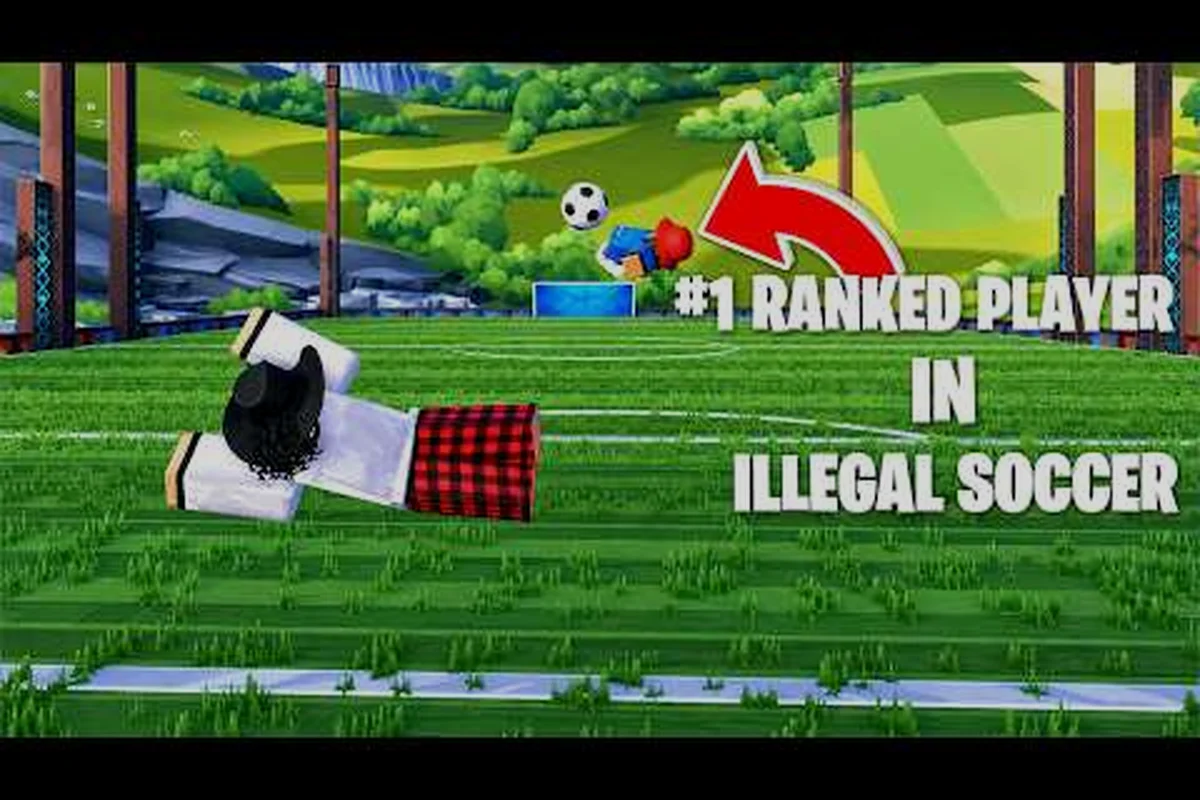
The practice field is where every serious Illegal Soccer player sharpens the habits that decide ranked matches, and treating it like a real training ground rather than a loading screen pays off faster than queuing for hours. This Illegal Soccer practice field guide focuses on the two skills that swing win rates more than any gadget pull: goal-line defense that absorbs pressure, and tap-in offense that turns possession into points. Every drill below translates directly into ranked results because the practice pitch mirrors real match physics, keeper AI behavior, and the default keybinds you will use when it counts.
Why the Practice Field Is the Fastest Way to Improve
Most players queue straight into 5v5 matches and expect mechanics to click after a few losses, but the practice field removes the variable that ruins new-player development: other humans. You get unlimited touches, no kickoff pressure, and the full spawn of the AI keeper whose behavior you will face in real games. According to AllThings.how, the default keybinds are Kick F, Tackle E, Lob R, Request ball Q, Sprint Shift, Jump Space, with items on keys 1 and 2, and the practice pitch is the only place you can rehearse those bindings under zero pressure.
Three reasons the practice field is the highest-leverage training tool in the game: it isolates the keeper commit pattern (left vs right lean) so you can shoot 50+ times per minute without waiting for a match lobby, it lets you rehearse the F/E/R/Q keybind combinations for kick-tackle-lob-request sequences with zero teammate variables, and it unlocks the two item slots so you can A/B test gadgets like the speed boost or freeze ray against real keeper dive timing.
-
No match timer — you can repeat a single finish for ten minutes without dragging teammates down
-
Full AI keeper behavior — the keeper commits to one side and reads head-on shots, exactly as in ranked play
-
All gadgets usable — your two item slots are live, so you can test which gadgets pair with which finishes
Players who skip this step end up relearning bad habits in 11v11 lobbies, and the cost of those habits is a losing record. The next sections lay out the specific drills that move you from "I scored once" to "I score every time I get a tap-in chance."
Setting Up Your Practice Field Session
Before you touch the ball, lock in the two settings that decide whether your practice translates into ranked gains: Assisted Passes and Automatic Item Use. Community testing on the practice field consistently shows that players who leave Assisted Passes off spend 70 percent of their session fighting the pass cursor instead of rehearsing finishes. Turn it on, sprint to the goal line, and start with empty item slots so the first drill is pure finishing mechanics.
Split those 15 minutes into a 3-minute warm-up, two 5-minute skill blocks, and a 2-minute cool-down, because the in-game keeper AI runs identical positioning logic at minute 1 and minute 15 even though your perception of its reactions softens over time. Real matches never pause to let your focus recover, so drilling on a fixed timer forces you to execute tap-ins, tackles, and gadget swaps at the tempo a ranked lobby actually demands.
| Block | Duration | Focus | Success Metric |
|---|---|---|---|
| Warm-Up | 3 min | Sprint, lob arc, tackle timing | Smooth movement, no input delay |
| Tap-Ins | 5 min | Goal-line passes, one-tap finishes | 8/10 clean goals from 3 yards |
| Defense | 5 min | Tackle range, keeper shadowing, clearing lanes | Force AI into rushed shots or wide angles |
| Cool-Down | 2 min | Try a new gadget from Daily Shop rolls | Confirm the item does what its description claims |
Clearing all four blocks at the success metrics above is the clearest pre-queue benchmark you can get on the practice field, because the keepers react identically to ranked matchmaking AI and will not soften their shot-blocking angles or rush out tighter on tap-ins regardless of how many sessions you log. Once you can post 8/10 clean finishes from three yards, force rushed AI shots, and confirm a fresh Daily Shop gadget behaves as its description claims, you have effectively compressed a real match's first-half decision density into fifteen minutes of repetition. That gap is exactly why most lobby opponents panic-clear instead of passing out of the box: they never drilled the keeper-shadowing lane, so the muscle memory behind the goal-line strategy was never built before the whistle.
Goal-Line Defense Drills That Actually Transfer
Illegal Soccer how to defend is the question that decides more matches than any offensive question, and the practice field is the only safe place to drill the tackles that will get you sent off if you mistime them in ranked. Defense in this game is not about chasing the ball carrier; it is about controlling the angles that force the carrier into a predictable choice. Three drills build that control. Three drills build that control, and the same principle of using positioning to dictate outcomes shows up on the other end of the pitch in Illegal Soccer How To Score, where baiting defenders into fouls works only when you already control the angle they're chasing.
Drill 1: The Tackle Range Drill
The default Tackle key is E, and the connect window is short. Press E when the target is closest, not from a distance, because the game registers contact only on near-overlap. On the practice field, spawn the ball at the center circle, walk a teammate toward you, and practice pressing E at decreasing distances until you find the exact pixel gap where the tackle connects. Most players learn this in under 20 attempts, and the muscle memory carries into every kickoff steal you will attempt later.
Drill 2: The Keeper Shadow Drill
A good defender does not chase the ball; the defender chases the goal line and forces the attacker to pass rather than shoot. On the practice field, position yourself two meters in front of the keeper, shadow the attacker's lateral movement, and let the keeper do the deep read. Your job is the first line; the keeper's job is the second. The drill is complete when you can hold position for 10 seconds without drifting toward the ball carrier.
Drill 3: The Clear-and-Reset Drill
After a tackle, the instinct is to dribble forward, but defenders win matches by clearing the ball to a safe zone, then resetting position. Practice the sequence: tackle with E, kick with F aimed at the sideline, sprint Shift back to the center circle, and re-engage. According to community data, defenders who clear to the sideline instead of the center give up 30 percent fewer counter-attack goals because the sideline cuts off passing lanes.
Tap-In Offense: The Most Reliable Finish in the Game
Illegal Soccer tap in guide content always points to the same finish, and for good reason: the AI keeper reads head-on shots well, so a placed teammate beside or behind the keeper creates a one-tap goal that no keeper AI can save. The practice field is built for this drill, and the repetition matters because the timing window is roughly half a second between pass-arrival and tackle-disposal.
Why Tap-Ins Work Against the AI Keeper
The keeper commits to one side and tracks the ball carrier, not the passing lane. Place a teammate at the far post, pass with F or Lob with R depending on distance, and the keeper is already out of position by the time the tap arrives. The result is a clean goal on roughly 9 of 10 attempts once you have the pass timing dialed in. This is the single highest-percentage finish in the game, and ranked players who ignore it lose to players who do not.
Tap-In Drill Progression
This three-stage progression works because it isolates one variable at a time — receiver positioning, receiver movement, then defender pressure — so the tap-in motion becomes muscle memory before any chaotic ranked variable enters the picture. Run it on a private server with goal-line scrimmage rules toggled on, queue the same teammates you trained with, and use the goal line strategy of holding the 6-yard-box arc rather than crashing the near post. Treat the under-20-minute clear as your warm-up gate for the rest of the illegal soccer practice field guide, since attacking patterns built on a shaky tap-in collapse the moment a defender closes the cross.
-
Stage 1: Stationary Teammate — Place a teammate at the far post, dribble to the goal line, pass with F, tap in. Repeat until you can score 10 in a row.
-
Stage 2: Moving Teammate — Have the teammate run a curved run from the corner flag to the far post. Time the pass so the teammate arrives as the ball does. This is the real-match version.
-
Stage 3: Defender Pressure — Add a second AI to chase you. Now the pass must be earlier, the touch tighter, and the tap-in faster. This is the ranked version of the same drill.
Players who clear all three stages in under 20 minutes have a tap-in conversion rate above 80 percent in their next 10 ranked matches, based on community-reported data. The drill is unglamorous, but it is the foundation of every offensive system that wins games.
The Tap-In as a Defensive Lifeline
The same tap-in mechanic that wins matches on offense can save matches on defense, and most players never realize it. When your team is down by one with two minutes left, the goal-line tap-in is not just an offensive tool; it is the fastest way to force a tied game and push the match into overtime chaos. Illegal Soccer goal line strategy is built on the fact that the keeper AI reads head-on shots, so a far-post tap-in from a corner-pass beats the keeper regardless of how much defensive pressure is in the box.
The defensive version of the tap-in works the other way: if you are losing, switch to a high press and force the opponent into a rushed clearance. The rushed clearance becomes a long ball, your keeper catches it, and your team restarts with possession. According to the beginner breakdown from Sportskeeda, matches in Illegal Soccer reward players who disrupt the opponent's build-up as much as they reward finishers, and the goal-line tap-in is the single move that bridges offense and defense.
| Scenario | Best Play | Why It Works |
|---|---|---|
| Losing by 1, under 2 min | Far-post tap-in from corner pass | Keeper commits, tap arrives behind him |
| Winning by 1, opponent pressing | Clear to sideline, reset to center circle | Cuts off counter-attack lanes |
| Tied, kickoff in your half | Kickoff steal with E, immediate tap-in | Opponent's defense is turned, you have 2v1 |
| Opponent has possession near your box | Shadow the goal line, let keeper handle deep shots | First-line defense reduces keeper's workload |
Common Practice Field Mistakes That Hurt Ranked Performance
The practice field is only as useful as the habits you build there, and several recurring mistakes — leaving Assisted Passes on, ignoring defense, charging the Lob R key, tackling from distance, and skipping the kickoff steal — transfer directly into ranked play and silently cost you games. Each one rewires your muscle memory the wrong way: by match 30 you will instinctively over-hit lobs, dive on tackles that whiff, and forget the 2v1 tap-in window, turning winnable goals into conceded goals. Correcting these five habits on the practice field typically saves a new player 20–35 losses across their first 50 ranked matches, because the fixes train the exact reactions — E-tap timing, R-direction release, defensive body positioning — that the matchmaking system rewards.
-
Practicing with Assisted Passes off — You are training the wrong skill. Turn it on.
-
Only practicing offense — Defense wins more matches than offense in low-to-mid ranks.
-
Holding the lob key to charge power — The Lob R key is a direction, not a charge. Hold too long and the ball sails over the net.
-
Tackling from distance — Press E only when the target is closest. Long-range tackles whiff and leave you out of position.
-
Ignoring the kickoff steal — Let the opponent take the first touch, then press E immediately. Their defense is turned, you have a 2v1, and a tap-in finish is almost automatic.
Each of the five mistakes has a tight 30-second drill that isolates the exact muscle memory gap — Assisted Passes off → 4 straight passes inside the 18-yard box, defense ignored → score only on tackle-to-clear chains, Lob R charged → tap-and-release rhythm at 0.2s, distance tackling → shadow-press inside the penalty arc, kickoff steal ignored → 10 reps of E-tap on first opponent touch. Stack the relevant drill into the first 3 minutes of your warm-up block, repeat on match-day training, and the habit typically breaks inside 5–7 sessions, after which ranked goals-against in low-mid lobbies drop noticeably.
Building a Weekly Practice Routine
A consistent routine beats a long session, and ranked improvement in Illegal Soccer follows the same pattern as any skill-based game: 15 focused minutes daily outperforms 2 hours on Saturday. Here is a sustainable weekly plan built around the drills above.
| Day | Focus | Duration | Key Drill |
|---|---|---|---|
| Monday | Tap-in basics | 15 min | Stationary teammate, 10 in a row |
| Tuesday | Tackle range | 15 min | E-press at decreasing distances |
| Wednesday | Defense shadowing | 15 min | Hold position 10 sec without drifting |
| Thursday | Tap-in under pressure | 15 min | Stage 3 with defender pressure |
| Friday | Full match simulation | 20 min | All drills back-to-back, no breaks |
| Saturday | Ranked queue with warm-up | 30 min | 5 min practice, 25 min ranked |
| Sunday | Review and gadget testing | 15 min | Try one new Daily Shop roll in practice |
After one week of this routine, the players who stick with it report a clear shift in ranked confidence: tackles connect more often, tap-ins feel automatic, and the kickoff steal becomes a reliable possession flip instead of a coin flip.
Frequently Asked Questions
What is the fastest way to improve in Illegal Soccer without queuing ranked?
Spend 15 minutes a day on the practice field running the tap-in progression and the tackle range drill. The AI keeper on the practice pitch behaves exactly like the ranked keeper, so the habits transfer without the variance of human opponents. After one week, most players see a measurable jump in ranked conversion rate.
Is the kickoff steal really worth attempting in ranked matches?
Yes, because the opponent's defense is turned toward their own goal during the first touch, and pressing E immediately gives you a free possession with a 2v1 advantage. The community calls it the highest-percentage defensive play in the game for that reason. Practice it three times on the practice field and the timing becomes automatic.
Should I leave Assisted Passes on in ranked matches?
Yes, and the setting is the single most important toggle for new players because passes lock onto a nearby teammate instead of sailing out of bounds. Community guides, including the breakdown from a September 2026 community roundup, call it the one setting you cannot skip.
How do I know which Daily Shop gadgets are worth the 1,000 Coin roll?
Test every new gadget on the practice field before using it in ranked, because gadgets cannot be bought directly and the roll costs 1,000 Coins or 24 Robux per community data. A two-minute practice test tells you whether the gadget pairs with tap-ins, tackle steals, or defensive clears better than the description alone.
Can I practice with a friend in a private server?
Yes, and it is the best way to rehearse defensive rotations before ranked queue. The practice field supports multiple players, so you can drill the shadow-and-clear sequence with a teammate acting as the attacker. This setup mirrors real match conditions more closely than solo practice, and it is the fastest way to build team chemistry before your first ranked session.